- Home
- Academy
- Affiliated Institutions
- Contact Us
- Faqs
- Foundation
- Glossary
- Anandha thandavam
- Ashtapadi (Pasyati Disi disi)
- Ashtapadi (Radhika Krishna)
- BhamaKalapam
- Brindavana Nilaye
- Dasavatharam
- Ganesha Kouthvam
- Govardhana giri dhara
- Jagadaananda kaaraka
- Kamakshi Stuthi
- Koluvaithiva Ranga Saayi
- Krishna Sabdam
- Kulukaka Nadavaro
- Lakshmi Pravesam
- Mandooka Sabdam
- Marakatha Mani Maya
- Muddugare Yesoda
- Narayaneeyam
- Neelamegha Sarira (Tharangam)
- Okkapari kkokkapari
- Grammar
- Akasiki Charis
- Asamyuta Hastas
- Bhaumi Charis
- Nritta Hastas
- Kalakshetra
- Music
- NATYA VISHARADHA
- Operas
- Sri Pada Parijatham
- Ardhanareeswaram
- Chandalika
- Haravilasam
- Kirataarjuneeyam
- Ksheera Saagara Madhanam
- Origins
- Origins1
- Origins2
- Origins3
- Origins4
- Jagannadha Sarma Vedantam
- Krishna Murthy Chinta
- Madavayya Hari
- Mahankaali Chinna Sathyanarayana


(These are the hand movements usedonly in pure dance. These are 30 in number mentioned by Bharata in his Natya Sastra, which Kuchipudi uses them all. )

CHATURASRAU TATHO

There are 30 types of Nritta Hastas. They are :
| 1. Chaturasra | 16. Karihasta |


 |
 VAKSHASTHOSHTANGULASTHOU VAKSHASTHOSHTANGULASTHOUTU PRANGMUKOU KATAKAMUKOU SAMANA KURPARAMSOU TU CHATURASTROU PRAKIRTITOU |

Keeping the elbows in line with the shoulders, the Katakamukha hands should be partially extended out in front of the chest with the palms facing away from the body. This is known as Chaturasra.


 |
HAMSAPAKSHAKURTOU HASTOU VYAVRUTOU TALAVRUNTAVAT UDHVRUTHAVITI VIGNEYAVATHAVA TALAVRUNTAKOU |
Both hands must be kept in Hamsapaksha hand position in front of the chest. Each hand is then moved up and down to its original position alternately, resembling the swaying movement of palm leaves. This is known as Udvrttha.

 |
CHATURASTRA STHITOU HASTOU, HAMSAPAKAKSHAKRUTOU TATHA TIRYAKSTHITOU CHABHIMUKOU GNEYOU TALAMUKA VITI |
This hand gesture is similar to Chaturasra; the only difference being the palms of the two Katakamukha hands must face each other. Then it is known as Talamukha.

| TAVEVA MANIBANDHANTE SWASTIKAKRUTI SANCHITOU |
When the Talamukha hands are closed at the wrist, it becomes Svastika Hasta.

 |
SWASTIKAVITI VIKYATOU VICHYUTOU VIPRAKIRNAKOU |
When the Svastika hands are released, resembling Talamukha, it becomes Viprakirna Hasta.

 |
ALAPALLAVASAMSTHANAVURDHV- ASYOU PADMAKOSAKOU ARALA KATAKAYOU VA ARALA KATAKAMUKOU |
Turn the two Alapallava (Alapadma) hands into Padmakosha with palms facing up,

 |
BHUJAMSAKURPARAGRAISTU KUTILAVARTITOU KAROU PARANGMUKHATAYAVIDDHOU GNEYAVAVIDDHA VAKRAKOU |
The two Pataka hasta hands must must touch the opposite shoulders, elbows and hands before moving outwards. The hands then move in a graceful (kutila) fashion with the palms turned a little towards the back.
 |
HASTOU TU SARPASIRASOU MADHYAMANGUSHTAKOU YADA TIRYAKPRASARITASYOU CHA TADA SUCHIIMUKOU SMRUTOU |
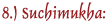
The two Sarpasirsha hands with the thumbs and middle fingers touching each other are then moved away. The hands are now in Sarpasirsha position with the palms facing each other. This is known as Suchimukha.

 |
RECHITOU VAPI VIGNEYOU HAMSAPAKSHODDHRUTA BHRAMOU PRASARITOTTANATALOU RECHITAVEVA SANSTHITOU |
The two Hamsapaksha hands with the palms facing up are moved up and down alternately.

 |
CHATURASRO BHAVEDVAMAHA SAVYAHASTASCHA RECHITAHA VIGNEYOU NRUTTATATVAGNAI RARDHARECHITA SANGNAKOU |
The left hand must be in Chaturasra position and the right hand in Rechita position. This is known as Ardharechita..

 |
ANCHITOU KURPARAMSOU TU TRIPATAKA KAROU KINCHITTIRYAGGATAVETOU SMRUTA VUTTANA VANCHITOU |
The two Tripataka hands are slightly bent at the elbows, and the shoulders and elbows are moved in a gentle up and down swaying movement.

 |
MANIBANDHANMUKTOU TU PATAKOU PALLAVOU SMRUTOU |
The two Pataka Hands are held in front of the chest and crossed at the wrist.

 |
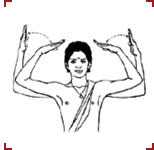
BAHUSIRSHADVINISHKRANTOU NITAMBAVITI KIRTITOU |
The two Pataka hands are moved from the shoulder to the hip.

 |
KESADESADVINISHKRANTOU PARIPARSVA STHITOU YADA VIGNEYOU KESABANDHAKYOU KARAVACHARYA SAMMATOU |
The continuous movement of two Pataka hands from the top of the head to either side of the face is known as Kesabandha.

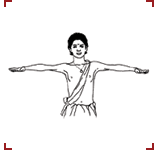 |
LATAKYOUCHA KAROU GNEYOU NRUTTABHINAYANAM PRATI |
The two Pataka hands should be stretched out to the sides, keeping the elbows in line with the shoulders.

 |
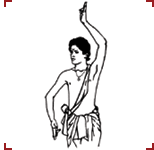
SAMMUNNATO LATAHASTAHA PARSVATPARSVAM VILOLITAHA TRIPATAKOPARAHA KARNE KARIHASTOU PRAKIRTITOU |
The left hand should be kept near the ear with Tripataka hand position. The right hand should be extended out in Pataka hand position and moved from side to side. This is known as Karihasta. This can also be done in reverse with the right hand near the ear.

 |
KATISIRSHANIVISHTAGROU TRIPATAKOU YADA KAROU PAKSHAVANCHITAKOU HASTOU TADA GNEYOU PRAYOKTRUBHIHI |
The right Tripataka hand should be about six inches away from the waist and the palm facing the floor. The left Tripataka hand should be six inches above the head with the palm facing the right side.

 |
TAVEVA TU PARAVRUTOU PAKSHAPRADHYOTAKOU SMRUTOU |
When Pakshavanchita hands are reversed i.e. the right hand above the head and the left hand near the waist, it is known as Pakshapradyotaka.

 |
ADHOMUKA TALAVIDHDOU GNEYOU GARUDA PAKSHAKOU |
Both Tripataka hands are placed on either side of the body facing the hips. They are then lifted up and positioned at least a foot away from either side of the head with the palms facing up.

 |
HAMSAPAKSHAKRUTOU HASTOU VYAVRUTA PARIVARTITOU YATHA PRASARITA BHUJOU DANDAPAKSHAVITI SMRUTOU |
Both Hamsapaksha hands, starting from the front of the chest are moved alternately until the hand and shoulder are extended outwards.

 |
VURDHVAMANDALINOU HASTA VURDHVADESA VIVARTANAT |
When the two Pataka hasta handsare fully extended up with the palms palms facing you and fingers pointing towards the sky. It is known as Urdhvamandali.

 |
VUDVESHTITO BHAVEDEKO DVITIYASCHA VISESHTITAHA |
When the two Pataka hands are extended sideways with the palms facing each other, it is known as Parshvamandali.

 |
BHRAMITAVURASAHA STHANE HYURO MANDALINOU SMRUTOU |
The two hands in Pataka hand position are held in front of the chest with palms facing up. The palms are lifted in a circular motion, with the fingers extending the left hand up above the head and the palm facing the sky and fingers pointing towards the right side, are extending the right hand simultaneously to the right side with the palm facing down and fingers pointing to the right side.

 |
ALAPALLAVAKARALA VURODHVA BHRAMANA KRAMAT PARSVARTASCHA VIGNEYAVURAHA PARSVARDHVAMANDALOU |
Keeping the Alapallava hand position with the right hand in front of the chest and Arala hand position with the left hand fully extended out to the left, the hands are then moved simultaneously from side to side.

 |
HASTOU TU MANIBANDHANTE KUNCHITAVANCHITOU YADA KATAKAKYOU TU TOU SYATAM MUSHTIKASVASTIKOU TADA |
Keeping the elbow in line with the shoulders, both hands close to each other, are in Arala hand position with the fingers pointing down and palms facing yourself. The hands are then turned upwards changing first to Alapallava and the to Katakamukha hands position, before crossing them at the wrist. This is known as Mushtikasvastika.

 |
PADMAKOSOU YADA HASTOU VYAVARTAPARIVARTITOU NALINI PADMAKOSOU TU TADA GNEYOU PRAYOKTRUBHIHI |
The two Padmakosha hands are moved up and down alternately in front of the chest..

 |
KARAVUDVESHTITAGROU TU PRAVIDHAYALAPALLAVOU |
The fingers of the two Pataka hands in front of the chest and palms facing down are moved delicately up and down. Doing this movement the palms are lifted so that they face each other.

 |
VURDHVAPRASRARITA VIDDHOU VIGNEYA VULBANAVITI |
The Alapallava Nritta hasta when moved from the front of the chest and placed on the shoulders with the continuous movement of the Pataka hands, it is known as Ulbana.

 |
PALLAVOU CHA SIRODESE SAMPRAPTOU LALITOU SMRUTOU |
When the hands from the Ulbana position move to the top of the heap, it is known as Lalita.

 |
KURPARA SWASTIKAGATOU LATAKYOU VALITAVITI |
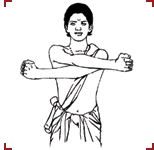
When both Pataka hands are crossing at the wrist as in Swastika, it is known as Valita.