- Home
- Academy
- Affiliated Institutions
- Contact Us
- Faqs
- Foundation
- Glossary
- Anandha thandavam
- Ashtapadi (Pasyati Disi disi)
- Ashtapadi (Radhika Krishna)
- BhamaKalapam
- Brindavana Nilaye
- Dasavatharam
- Ganesha Kouthvam
- Govardhana giri dhara
- Jagadaananda kaaraka
- Kamakshi Stuthi
- Koluvaithiva Ranga Saayi
- Krishna Sabdam
- Kulukaka Nadavaro
- Lakshmi Pravesam
- Mandooka Sabdam
- Marakatha Mani Maya
- Muddugare Yesoda
- Narayaneeyam
- Neelamegha Sarira (Tharangam)
- Okkapari kkokkapari
- Grammar
- Akasiki Charis
- Asamyuta Hastas
- Bhaumi Charis
- Nritta Hastas
- Kalakshetra
- Music
- NATYA VISHARADHA
- Operas
- Sri Pada Parijatham
- Ardhanareeswaram
- Chandalika
- Haravilasam
- Kirataarjuneeyam
- Ksheera Saagara Madhanam
- Origins
- Origins1
- Origins2
- Origins3
- Origins4
- Jagannadha Sarma Vedantam
- Krishna Murthy Chinta
- Madavayya Hari
- Mahankaali Chinna Sathyanarayana


(Gestures of single or non-combined hand)
Hastaabhinaya (Gestures of the Hands)
ANGUSTHA: THUMB FINGER
TARJANI: FORE FINGER
MADHYMA: MIDDLE FINGER
ANAMIKA: RING FINGER
KANISHTHA: LITTLE FINGER

“PATAKASTRIPATAKASCHA TATHA VAI KARTARIMUKHAHA ARDHACHANDRO HYARALASCHA SUKATUNDASTATHAIVA CHA MUSHTISCHA SIKHARASCHA KAPITHAHAKATAKAMUKHAHA SUCHIASYAH PADMAKOSHASCHA TATHA VAI SARPASIRSHAKAHA MRIGASIRSHAH PARO GNEYO HASTABHINAYAYOKTRIBHIHI LANGULO HELAPADMASCHA CHATURO BHRAMARASTATHA HAMSASYO HAMSAPAKSHASCHA SAMDAMSO MUKULASTATHA URNANABHA TAMRACHUDAHA CHATURVIMSADIME KARAHAâ€

There are 24 types of Asamyuta Hastas. They are :
| 1. Pataka | 13. Sarpasirsha |


 |
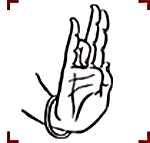
 PRASARITAGRAAH SAHITA PRASARITAGRAAH SAHITAYASYANGULYO BHAVANTIHI KUNCHITASCHA TATHANGUSTHA SA PATAKA ITI SMRUTAHA |

Where all the fingers are extended, keeping them close to one another with the thumb bend, the gesture is called Pataka.

To describe cloud, Forest, River, Open doors, to beat, Natyaarambha (to start dance) etc.


 |
TRIPATAKE YADA HASTE BHAVETPRUSHTHAVALOKINI TARJANI MADHYAMAYASCHA TADASAU KARTARIMUKHAHA |
In the Pataka hand the ring finger is kept bend this should be known Tripataka.
Crown, Tree, Vajrayudha, raising flames, lamb, arrow etc.

 |
PRASARITAGRAAH SAHITA YASYANGULYO BHAVANTIHI KUNCHITASCHA TATHANGUSTHA SA PATAKA ITI SMRUTAHA |
In the Tripataka hand if the index finger faces the back of the middle finger it is Kartarimukha.
Separation, corner of an eye, lightning.

 |
YESYANGULYASTU VINATAHA SAHANGUSTHENA CAPARAM SORDHACHANDRO HI VIGNEHAKARAH KARMASYA VAKSYATE |
The thumb is bent to outside, the rest of the fingers are brought together and the shape must be seen like a bow, it is called Ardhachandra.
<< Prev Next >>
Half Moon, Waist, Greeting by the common people etc.

 |
ADYA DHANURLATA KARYA KUNCHITANGUSHTHAKAH TATHAH SESHA BHINNORDHVAVALITA HYARALANGULYAH SMRUTAHA |
The index finger is bent like a bow. The thumb is bent without touching the forefinger. The rest of the fingers are kept closely, then it is called Arala.
Drinking nectar, poison, Pride, courage, beauty, Contentment, act of blessing etc.

 |
ARALASYA YADA VAKRA ANAMIKA TVANGULIR BHAVET SUKATUNDASTU SA KARAHA KARMA CHASYA NIBODHATA |
When the ring finger of Arala hasta is bent, it is called Sukatunda. Usages: Shooting an arrow, Parrot’s beak etc.
Shooting an arrow, Parrot’s beak etc.

 |
ANGULYO YASYA HASTASYA TALAMADHY GRASAMSTITAHA TASAMUPARI CHANGUSHTAHA SA MUSTIRITI SANGNITAHA |
TAll the other fingers are bent into the palm. The thumb is placed on top of the other four fingers. Then the hand gesture is called Musti.
Holding hair, Fighting, Showing strength etc.

 |
ASYAIVA TU YADA MUSHTEH URDHVANGUSHTAH PRAYUJYATE HASTAH SA SIKHARO NAMA TADA GNEYAH PRAYOKTRIBHIHI |
If the thumb of the musti gesture lifted up it should be known as Sikhara..
Bow, Pillar, showing lips, painting feet, raising up hairs etc..

 |
ASYAIVA SIKHARAKHYASYA MUKHENGUSHTHENIPIDITA YADA PRADESINI VAKRA SA KAPITTHASTADA SMRUTAHA |
From Sikhara hasta, the forefinger is kept curved and pressed by the thumb. It is called Kapittha.
Weapons such as sword, bow, throwing a javelin, sakti, Milking cow, arrow etc.

 |
UTKSHIPTAVAKRA TU YADA ANAMIKA SAKANIYASI ASYAIVA TU KAPITTHASYA TADASOU KATAKAMUKHAHA |
From the Kapittha gesture if the ring finger and the little finger raised up and bent then it is called Katakamukha.
Hotra (sacrifice), Havya (offering into the fire), Umbrella, Flower garland, Churning etc.

 |
KATAKAKHYE YADA HASTE TARJANI SAMPRASARITA HASTAH SUCHIMUKHO NAMA TADA GNEYAH PRAYOKTRIVHIHI |
The forefinger of the Katakamukha hand to be stretched it is called Suchi.
To describe number one, world etc

 |
SYANGULYSTU VIRALAHA SAHANGUSHTHENA KUNCHITAHA URDHVA HYAMSAGATAGRASCHA SA BHAVET PADMAKOSHAKAHA |
All the fingers including the thumb are kept separately and the ends bent. They do not meet one another. It is called Padmakosha.
Lotus, to represent Bilva and Kapittha fruits and the breasts of women etc

 |
ANGULYAH SAHITAH SARVA SAHANGUSHTHENA YASYA TU TATHA NIMNATALASCHAIVA SA TU SARPASIRAH KARAHA |
When all the fingers including the thumb to be closed to one another and the palm to be hallowed. It is called Sarpasira..
Snake hood, the offering water to god and sages, pouring water (on anything), Challenging (for a duel), motion of the frontal globe (kumbha) etc.

 |
ADHOMUKHINAM SARVASAM ANGULYNAM SAMAGAMAHA KANISHTHANGUSHTAKAURDHVU SA BHAVET MRIGASIRSHAKAHA |
The Sarpasira hand with all its fingers pointing downwards but the thumb and little finger raised up. It is called Mrigasirsha.
To express women, calling, deer’s head, cheeks etc.

 |
TRETAGNI SAMSTHITA MADHYA TARJANYANGUSHTAKASTATHA ANGULENAMIKA VAKRA TATHA CHORDHVA KANEEYASEE |
The little finger raised up. The ring finger is kept bent and the three other fingers viz. the middle finger, the forefinger and the thumb finger are kept separated like the holy fire. This angle is called Langula.
Different fruits, fire, angry retorts of women etc.

 |
AVARTI NYAH KARATALE YASYANGULYO BHAVANTI HI PARSVAGATAVIKEERNASCHA SA BHAVET ALAPADMAKAHA |
The fingers are separated from one another and are kept turned towards the palm in a circular way. This is called Alapadma.
To show lotus, breasts, beauty etc.

 |
TYSRAH PRASARITA YATRA TATHA CHORDHVA KANAYASEE TASAM MADHYASTATHANGUSHTAHA SA KARASCHATURASMRUTAHA |
Tree fingers are spread. The little finger is lifted up and the thumb is kept within them. That is called Chatura.
To show little, skill ness, eyes etc.

 |
MADHYAMANGUSTHASAMDAMSHO VAKRA CHAIVA PRADESHINI URDHVAMANYA PRAKEERNA CHA ANGULYO BHRAMARE KARE |
The middle finger and the thumb touch each other and the forefinger is bent. The other two fingers are separated and raised. This is Bhramara.
To show bee, wing etc..

 |
TARJANIMADHYAMANGUSHTAHA TRETAGNISTHA NIRANTARAHA BHAVEYURHAMSWAVAKTRASYA SESHA DVE SAMPRASARITE |
Keeping the forefinger, middle finger and the thumb without any gap. The remaining fingers are to be kept stretched.
To show tying, softness, hold garland etc..

 |
SAMAHPRASARITASTISRAH TATHA CHORDHVA KANEEYASEE ANGUSHTAH KUNCHITASCHAIVA HAMSAPAKSHA ITI SMRUTAHA |
The three fingers are kept stretched resembling the wings of a swan. The small finger is kept raised and the thumb is kept bent. That is Hamsapaksha.
Touching of the chin and the mood of sorrow, showing respect etc.

 |
TARJANYANGUSHTHASANDAMSHO HYRALSYA YATHA BHAVET ABHUGNATALAMADHYASCHA SA SANDAMSA ITI SMRUTAHA |
The thumb and the forefinger of the Arala crossed like pincers and the palms is slightly hollowed. This is called Sandamsa.
Plucking of flowers, wreathing of garlands, taking up blades of grasses, leaves, hairs or thread, holding or pulling out an arrow, removing of thorn, painting the eyes, writing letters etc.

 |
SAMANATAGRAH SAHITA YASYANGULYO BHAVANTI HI URDHVA HAMSAMUKHASAIVA BHAVEN MUKULAKAH KARAHA |
The fingers bent and close to one another and their tips meeting together in the Hamsasya hand. This is called Mukala.
Lotus bud, throwing a Kiss, taking food, donating something etc.

 |
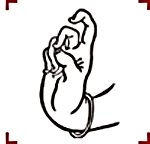
PADMAKOSHASYA HASTASYA ANGULYAH KUNCHITA YADA URNANABHAH SA VIGNEYAHA KESHACHOVRYAGRUHADISHU |
In the Padmakosha hand fingers are further bent. This is called Urnanabha because it resembles a spider.
Scratching the head, receiving stolen property, Disease of leprosy, Lions, Tigers, holding a stone etc.

 |
MADHYAMANGUSHTHASANDAMSHO VAKRA CHAIVA PRADESHINI SESHETALASTHE KARTAVYA TAMRACHUDE KARANGULI |
The middle crosses with the thumb, the index finger is kept bent, the remaining two fingers resting on the palm. This is called Tamrachuda.
To indicate rebuke, this hand is allowed to fall down with a thud. Beating time, instilling self-confidence, rapidity and gesticulation too are indicated hereby.